
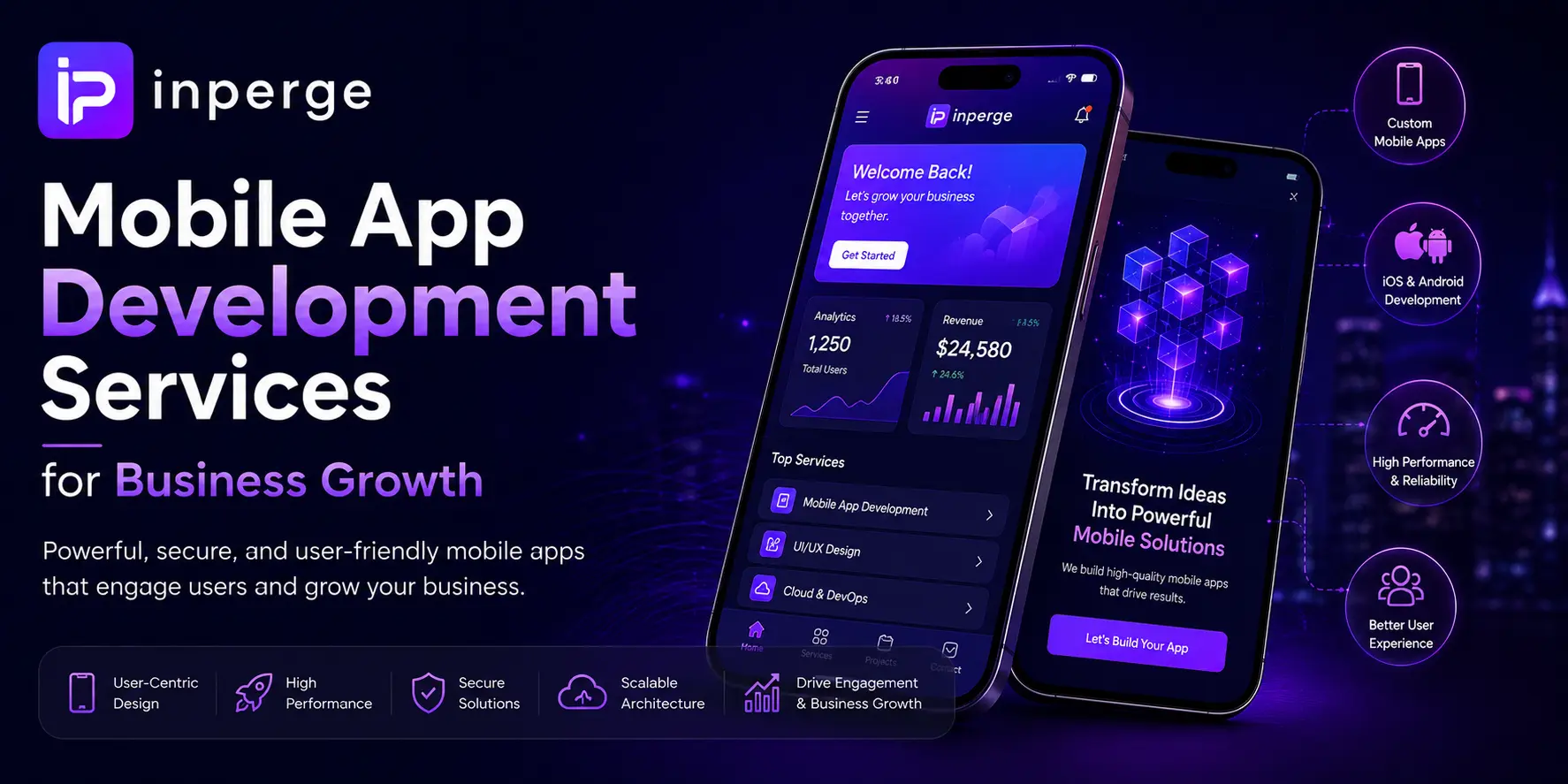
Mobile App Development Services for Business Growth
From customer engagement to new revenue streams — how professional mobile app development helps businesses grow, and how to choose native vs cross-platform.
Inperge Mobile Studio
Mobile Team
- What Are Mobile App Development Services?
- Why Mobile Apps Are Essential for Modern Businesses
- Growing Mobile Usage
- Changing Customer Expectations
- Supporting Digital Transformation
- Key Benefits of Mobile App Development Services
- Better Customer Engagement
- Improved Brand Visibility
- Enhanced Customer Experience
- Increased Revenue Opportunities
- Types of Mobile Applications Businesses Build
- E-Commerce Applications
- Healthcare Applications
- FinTech Applications
- Education Applications
- Enterprise Applications
- Native vs Cross-Platform App Development
- Native App Development
- Cross-Platform App Development
- Which Option Is Right for Your Business?
- Mobile App Development Trends in 2026
- AI-Powered Mobile Apps
- Super Apps
- Voice-Enabled Applications
- AR and VR Experiences
- IoT Integration
- How Mobile Apps Support Business Growth
- Higher Customer Retention
- Increased Sales Opportunities
- Better Customer Insights
- Stronger Brand Loyalty
- Choosing the Right Mobile App Development Company
- Conclusion
Mobile technology has transformed the way businesses interact with customers, manage operations, and deliver services. With billions of smartphone users worldwide, mobile applications have become an essential part of modern business strategies. Whether customers are shopping online, booking appointments, accessing services, or communicating with brands, mobile apps provide a convenient and personalized experience.
As businesses continue to embrace digital transformation, the demand for professional mobile app development services is growing rapidly. Companies are investing in custom mobile applications to improve customer engagement, increase efficiency, and create new revenue opportunities.
From startups launching innovative products to enterprises developing customer-centric solutions, mobile apps are becoming a powerful tool for sustainable business growth.
What Are Mobile App Development Services?
Mobile app development services involve designing, developing, testing, deploying, and maintaining applications for smartphones and tablets. These services help businesses create mobile experiences that align with their objectives while delivering value to users.
Common mobile app development services include:
- Android App Development
- iOS App Development
- Cross-Platform App Development
- Enterprise Mobile Applications
- E-Commerce Mobile Apps
- SaaS Mobile Applications
- UI/UX Design for Mobile Apps
- App Maintenance and Support
- API Integration and Backend Development
Professional development ensures that applications are secure, scalable, user-friendly, and optimized for performance.
Why Mobile Apps Are Essential for Modern Businesses
Consumers increasingly rely on mobile devices for everyday activities. As a result, businesses need to provide seamless mobile experiences to remain competitive.
Growing Mobile Usage
Mobile devices account for a significant share of internet traffic worldwide. Customers use smartphones to:
- Search for products and services
- Make online purchases
- Access business information
- Schedule appointments
- Communicate with brands
A mobile application allows businesses to stay connected with customers wherever they are.
Changing Customer Expectations
Today's consumers expect convenience, speed, and personalization. Mobile apps help businesses deliver faster interactions, personalized experiences, real-time notifications, and easy access to services. Meeting these expectations can improve customer satisfaction and retention.
Supporting Digital Transformation
Mobile applications play a critical role in digital transformation initiatives by helping businesses automate processes, improve communication, and enhance operational efficiency.
Key Benefits of Mobile App Development Services
Better Customer Engagement
Mobile apps create direct communication channels between businesses and customers. Features such as push notifications, in-app messaging, and personalized content help keep users engaged. Businesses can promote products and services, share updates instantly, encourage repeat purchases, and build stronger customer relationships.
Improved Brand Visibility
A mobile app keeps a brand visible on users' devices. Every time a customer opens their smartphone, the business remains within easy reach, increasing brand awareness and recognition.
Enhanced Customer Experience
Mobile applications provide a smoother and more personalized experience than traditional websites. Benefits include faster navigation, personalized recommendations, secure transactions, and easy account management. A positive user experience often leads to higher customer satisfaction and loyalty.
Increased Revenue Opportunities
Mobile apps create multiple opportunities for revenue generation. Businesses can generate income through:
- Online sales
- Subscription services
- In-app purchases
- Premium features
- Advertising models
A well-designed mobile application can become a significant revenue channel.
Types of Mobile Applications Businesses Build
E-Commerce Applications
Retail businesses use mobile apps to provide convenient shopping experiences. Features often include product catalogs, secure payment gateways, order tracking, loyalty programs, and personalized recommendations.
Healthcare Applications
Healthcare organizations leverage mobile apps for telemedicine services, appointment scheduling, patient management, and health tracking. These solutions improve accessibility and patient engagement.
FinTech Applications
Financial service providers build mobile apps for mobile banking, digital payments, investment management, and personal finance tracking. Security and compliance are particularly important in financial applications.
Education Applications
Educational institutions and EdTech companies use apps to deliver online learning, virtual classrooms, assessments, and student communication tools. Mobile learning continues to grow in popularity worldwide.
Enterprise Applications
Businesses develop internal applications to improve productivity and streamline operations. Examples include employee portals, sales management tools, workflow automation systems, and field service applications.
Native vs Cross-Platform App Development
One of the most important decisions during app development is selecting the right development approach.
Native App Development
Native applications are built specifically for a single platform such as Android or iOS. Advantages include superior performance, better user experience, enhanced security, and access to device-specific features. Native apps are often ideal for applications requiring advanced functionality.
Cross-Platform App Development
Cross-platform development uses a single codebase to create apps for multiple platforms. Popular frameworks include Flutter and React Native. Benefits include faster development, lower costs, easier maintenance, and a consistent user experience. This approach is often suitable for businesses seeking quicker market entry.
Which Option Is Right for Your Business?
The choice depends on factors such as budget, timeline, target audience, performance requirements, and long-term business goals. An experienced mobile app development company can help determine the best approach based on project requirements.
Mobile App Development Trends in 2026
AI-Powered Mobile Apps
Artificial Intelligence is transforming mobile experiences through intelligent chatbots, personalized recommendations, predictive analytics, and voice assistants. AI helps businesses deliver smarter and more engaging user experiences.
Super Apps
Super apps combine multiple services — payments, messaging, shopping, and transportation services — within a single platform. This trend is gaining popularity across various industries.
Voice-Enabled Applications
Voice search and voice commands are becoming increasingly common. Businesses are integrating voice capabilities to improve accessibility and convenience.
AR and VR Experiences
Augmented Reality (AR) and Virtual Reality (VR) technologies are creating immersive experiences in retail, real estate, education, and healthcare. These technologies enhance customer engagement and product visualization.
IoT Integration
Mobile apps are increasingly connected to smart devices and Internet of Things (IoT) ecosystems. Businesses can monitor, manage, and automate connected devices through mobile applications.
How Mobile Apps Support Business Growth
Mobile applications contribute directly to business growth by improving customer relationships and operational performance.
Higher Customer Retention
Regular engagement through notifications and personalized experiences helps businesses retain customers.
Increased Sales Opportunities
Mobile apps simplify purchasing processes and encourage repeat transactions.
Better Customer Insights
Businesses can collect valuable data regarding user behavior, preferences, purchasing patterns, and engagement levels. These insights support more informed decision-making.
Stronger Brand Loyalty
Convenient and personalized experiences encourage customers to remain loyal to a brand.
Choosing the Right Mobile App Development Company
Selecting the right development company is crucial to project success. Consider factors such as:
- Portfolio and case studies
- Technical capabilities
- Industry expertise
- Communication process
- Security practices
- Post-launch support
A trusted partner can help transform an idea into a successful mobile application that delivers measurable business value.
Conclusion
Mobile applications have become an essential component of modern business strategies. They provide businesses with powerful tools to engage customers, improve operational efficiency, increase revenue, and strengthen brand loyalty. Professional mobile app development services help organizations create secure, scalable, and user-friendly applications that support long-term growth. Whether developing a customer-facing mobile app, an enterprise solution, or an innovative digital product, investing in mobile technology can provide significant competitive advantages. As mobile usage continues to rise and customer expectations evolve, businesses that embrace mobile app development will be better positioned to succeed in an increasingly digital world.
Building something like this?
Our team turns ideas into shipped software. Tell us about your project and we'll map out the path.
Start a conversation